Last Updated:

In a deposition, a claimant can sound 100% certain…until their testimony collides with the rest of the claim file.
This happens all the time. A claimant swears under oath that their neck pain began on the date of the accident, but a chart note from two years earlier shows a pre-existing spinal issue.
Or an offhand remark buried in a primary care doctor's intake notes starts to undermine the primary injury claim.
Finding these gaps is what makes deposition analysis so labor-intensive.
You can't just read the transcript; you have to test it against every document and bill in the file. Doing that manually means hours of rigorous cross-checking while hoping you don’t miss anything.
AI deposition tools shorten that hunt. The best platforms parse testimony, cross-check it against the evidence, flag contradictions automatically, and point you straight to the facts that matter.
Here is a breakdown of the best AI deposition analysis software for 2026 and how they stack up against each other.
What a Defense Deposition or EUO Analysis Must Show You
An Examination Under Oath (EUO) usually isn't routine. It gets triggered because something about the claim already looks off, and the insurer wants facts pinned down before a decision. That means there's less room to miss something.
A good deposition summary tells you what the witness said, but a useful defense analysis goes further and tells you what that testimony does to the claim.
That means looking past isolated admissions or memorable quotes, and instead checking the testimony against the medical history, bills, prior statements, demand materials, and everything else already in the file.
Here are the findings that matter most.
Where the testimony conflicts with the medical record
You have to start with the obvious question: does the story told under oath match the documented history?
A claimant may testify that an injury began after the loss even though earlier records show similar complaints. They may describe continuous treatment when the chronology contains a long gap. The severity described at deposition may also sit awkwardly beside what contemporaneous records actually document.
These conflicts matter because they can change how the team looks at causation, damages, and the overall value of the claim.
The important capability here is cross-document analysis. The software needs to compare testimony with the treatment timeline rather than analyze each document in its own little bubble.
Where the bills, treatment, and testimony do not line up
The medical record doesn’t tell you everything. That’s why the billing should be tested against it too.
A useful analysis can find treatment volumes that seem inconsistent with the testimony and charges that do not line up neatly with the documented care. It can also reveal parts of a demand that deserve another look when compared with the underlying records.
This is really useful when the claim file contains hundreds of pages of records and itemized bills. The interesting fact is often not contained in either document alone; it appears when you combine them.
How the story changed over time
Claims also develop over months or years, so the deposition may be only one version of the story.
There may already be a recorded statement, an EUO, medical histories, or earlier testimony in the file. The important question is whether the same facts stayed consistent across all of them.
For example, did the description of the injury change, or did the claimant give the same account of prior symptoms? Did one version add details that were missing before?
Tracking those changes can give defense counsel a much clearer place to focus.
What the witness admitted, confirmed, contradicted, or never answered
Not every important finding is a contradiction.
Sometimes the witness confirms an important fact. Sometimes they make a useful admission. And sometimes a question never gets a clear answer at all.
That last category matters because long examinations move quickly. A topic can easily get buried once the questioning shifts elsewhere.
A useful analysis should therefore show what was confirmed, contradicted, admitted, or left unresolved.
What matters for this particular claim
Finally, the analysis has to follow the issues that matter in the case.
For one claim, that may be causation or prior injuries. For another, it may be treatment gaps, damages, occupancy, notice, ownership, or another coverage issue.
So the software should not rely only on generic AI highlights. It should help the team analyze testimony against the questions, issues, and evidence that actually matter in that file.
And when it flags something important, the reviewer should be able to trace the finding back to the source.
That is the real test of useful deposition analysis: it should show where the testimony matches the file, where it does not, and what still needs a closer look.
The Best AI Deposition Analysis Software for Defense Counsel and Claims Teams
To find the right AI deposition analysis software for defense and claims teams, we looked at these capabilities:
cross-document evidence analysis,
live examination support,
explicit EUO workflows,
source-level verification, and
fit for defense and claims teams.
Features can vary by plan and change quickly, so confirm any must-have capability directly with the vendor.
Here are the shortlisted tools in a single comparison:
Built for | Reads testimony against case evidence | Live examination support | Examination Under Oath (EUO) support | |
|---|---|---|---|---|
InFactIQ | Carriers, TPAs, defense firms | Yes, across the claim file | Yes | Yes |
LegalMation | LegalMation | Limited | No | Not marketed |
Prevail | Litigation teams | Yes, across loaded case materials | Yes | Not marketed |
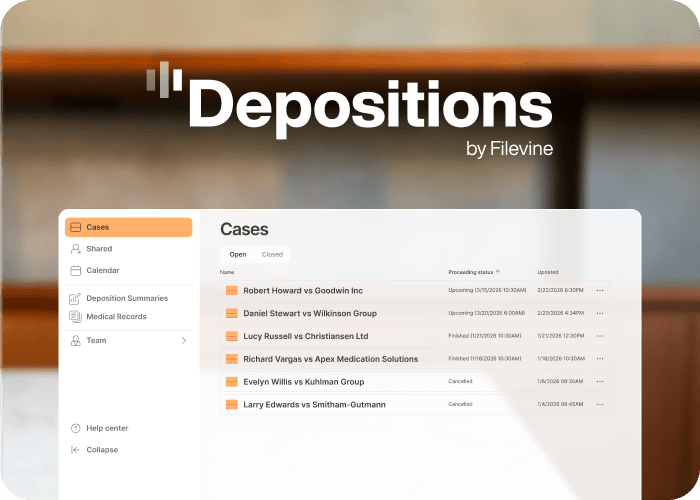
Depositions by Filevine | Litigation teams, especially Filevine users | Yes, against project documents | Yes | Yes |
Steno | Litigation teams | Mainly transcript-to-transcript | No | Not marketed |
Everlaw | Document-heavy litigation teams | Yes, across evidence review | No live AI analysis | Not marketed |
NexLaw | Solo and small litigation teams | Some cross-file capability | No | Not marketed |
The tools below solve different parts of the deposition workflow, so a simple best-to-worst ranking would be misleading. Some focus on transcript analysis while others are inside broader litigation platforms. A smaller group can connect live testimony with the rest of the claim file.
We have grouped them by what they are actually built to do, then looked at where each one fits for defense counsel and claims teams.
Cross-evidence claims intelligence


Real-time examination support

Transcript-native analysis
These tools are built mainly to analyze deposition transcripts. They can summarize testimony with key statements and sometimes also compare what witnesses said across transcripts.
What they generally do not do is test that testimony against the wider claim file, such as medical records or demand materials. For teams that mainly need faster transcript review, that may be enough.
Top pick: Steno
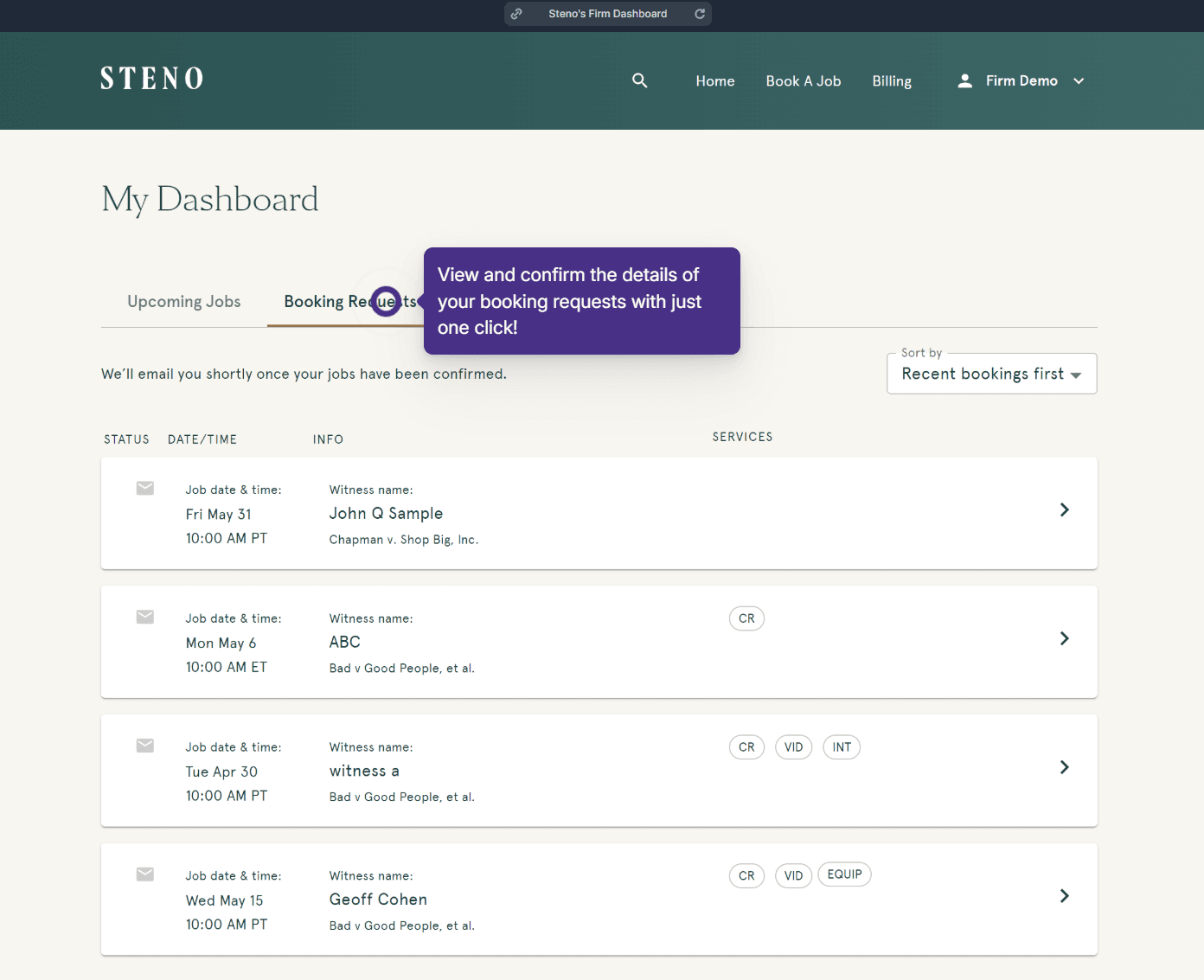
Steno is a tech-enabled court reporting agency whose AI transcript analysis tool, Transcript Genius, is included free with any deposition booked through the agency, while also accepting third-party transcript uploads.
Key features:
Conversational querying allows natural language search across transcripts with precise page-and-line citations back to the record.
Multi-deposition analysis to instantly highlight contradictions and conflicting accounts between witnesses.
Generates structured deposition summaries tailored to key case themes in minutes.
Easy sync with legal software (Clio, Litify, Zoom) and deferred litigation financing via Steno’s DelayPay program.
Steno maintains SOC 2 Type II compliance and ensures client data is never used to train underlying AI models.
However, the tool’s analysis is bounded by the transcript record. Steno excels at discovering witness testimony and contradictions, but it does not analyze non-deposition case files like medical records, billing statements, or underlying discovery documents.
Steno is better at court reporting and transcript management. InFactIQ tackles a different problem. Instead of focusing mainly on completed transcripts, it works during depositions and EUOs and connects testimony with the wider claim file.
Honorable mentions: Everlaw and NexLaw
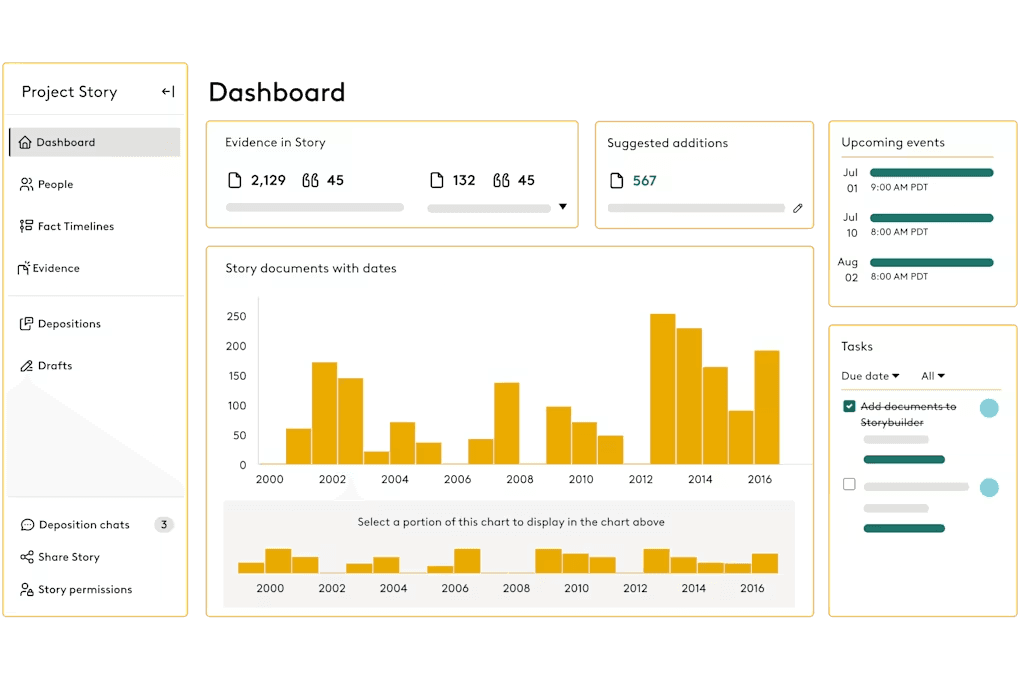
Everlaw is a cloud-based e-discovery and litigation platform for reviewing large volumes of evidence and building case strategy
Everlaw integrates deposition management into its Storybuilder suite, using its AI Writing Assistant to summarize testimony and connect deposition transcripts directly to the existing e-discovery review corpus.
While it enables teams to associate deponents with custom People Profiles, its true strength lies in linking live testimony to key evidence and facts inside the same workspace. It is the ideal solution for document-intensive cases already managed in e-discovery, but not for other use cases.
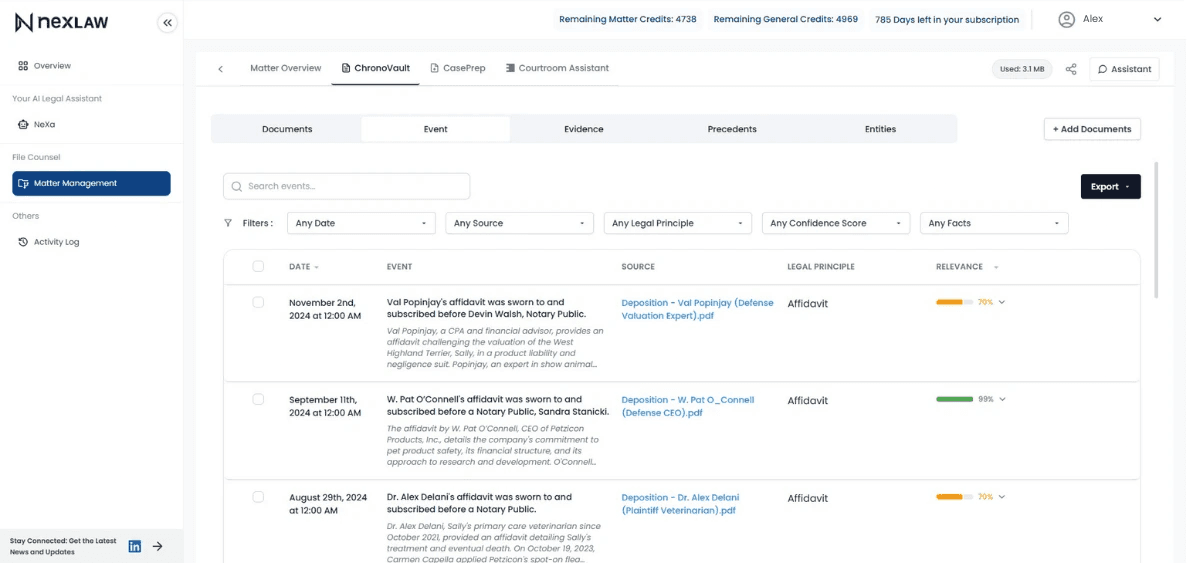
NexLaw is an AI legal platform for litigators and trial teams. Its Deposition Insights product provides topic summaries, key admissions, page-and-line citations, cross-deposition analysis, semantic search, and contradiction detection across depositions and related documents.
NexLaw also offers broader document-analysis tools for working with other case materials. That gives it more cross-file capability than a transcript-only product, although it remains a general litigation AI platform rather than a claims-specific system or live examination tool.
Why Vendor Accuracy Claims Do Not Tell You Much
Most vendors will quote an accuracy rate for things like transcript summaries or fact extraction. The problem is that there is no independent benchmark for deposition analysis, so those percentages are based on different tests and are difficult to compare.
For defense teams, three kinds of errors matter much more.
The AI can cite the right source and still get the point wrong
Stanford RegLab found hallucination rates of 17% to 33% among leading legal AI tools. But another problem is just as important: misgrounding. This happens when the AI gives you a real citation, but the source does not actually support what the AI claims.
In deposition analysis, that could mean a correct page-and-line citation attached to a misleading description of the witness's answer. Because the citation itself is real, the mistake can be harder to spot.
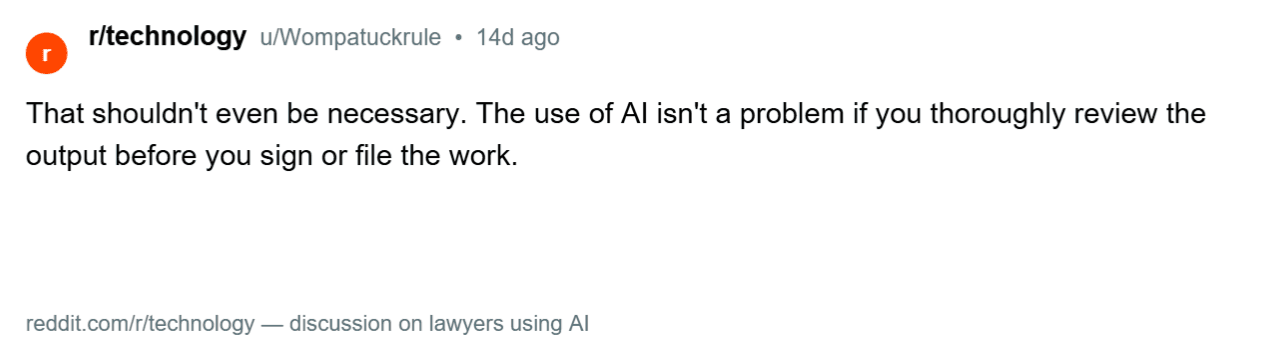
However, that doesn’t mean AI doesn’t have its place:
AI can also miss something completely
This may be the bigger risk for defence teams. A wrong provider name is easy to notice, but an admission or contradiction the software never finds is much harder to catch because you do not know it was missed.
That is why a polished demo is not enough. Test the platform on a closed claim your team already understands well. Then check how many known contradictions and important facts it actually finds.
Human review is often sidelined in favor of automation
You should also understand where human review fits into the process. Some platforms generate everything automatically while others add lawyer review, court reporter verification, or another human quality-control step.
More review can improve confidence, but it can also slow turnaround. The right balance depends on the importance and exposure of the claim.
Finally, be cautious with behavioral or demeanor scoring. Judging deception from someone's behavior is unreliable. Treat these signals as possible areas for further questioning but not as proof that a witness is lying or telling the truth.
See What Can InFactIQ Find in a Real Claim File
Depositions and EUOs are only useful when you can connect the testimony to the rest of the claim file. A statement that sounds consistent on its own may conflict with an older medical record, a prior statement, or the billing history.
Checking a claim file by hand takes time, and the most important inconsistency can be buried several documents away. That is where a claims-focused platform like InFactIQ really becomes useful.
InFactIQ brings the full claim record into one place and analyzes it as connected evidence. It compares deposition and EUO testimony with medical records and other case materials.
Defense teams can spot contradictions faster and verify each finding against the original source