Last Updated:

The legal AI market is no longer theoretical. It is funded, deployed, and already shaping litigation outcomes. And right now, most of that momentum is flowing toward the plaintiffs' bar.
A Capital Wave, Plaintiff First
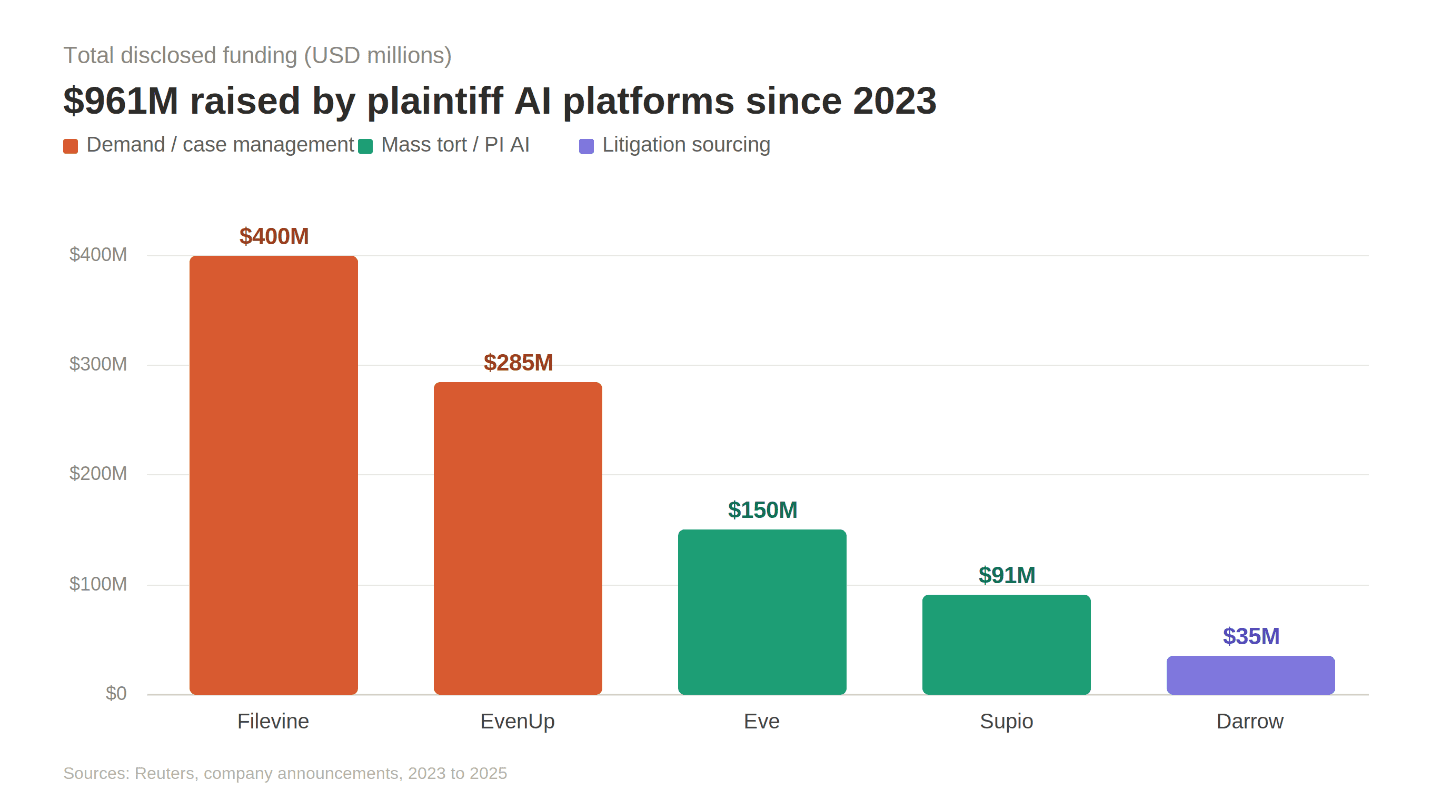
Plaintiff-focused AI companies have raised a massive amount of investment capital at eye-watering valuations, and the message is clear: investors believe AI will materially change how plaintiff firms find, value, build, and resolve cases. These tools are helping plaintiff attorneys move faster, process more matters, surface higher-value opportunities, generate stronger demands, and create settlement leverage before many defense and claims teams even know what is coming.
This is not isolated venture activity. It is a signal. Capital is flooding into tools that help plaintiff attorneys move faster, at scale. As one industry post bluntly put it: “The plaintiff’s bar is winning the AI arms race - and it’s not even close.” (LinkedIn)
The AI Advantage Is a Litigation Advantage
For plaintiff firms, AI is not just about saving time. It is about leverage. A firm using AI can screen more cases, issue demands faster, pressure reserves earlier, and now proactively source entirely new waves of mass tort litigation before the defense side knows a trend is forming. That creates a compounding advantage that grows with every file.
The question for defense litigators, carriers, TPAs, and SIUs is not whether AI will affect litigation. It already is. The question is whether the defense and claims ecosystem will respond with tools built for its own workflow.
Defense Teams Have a Different Problem
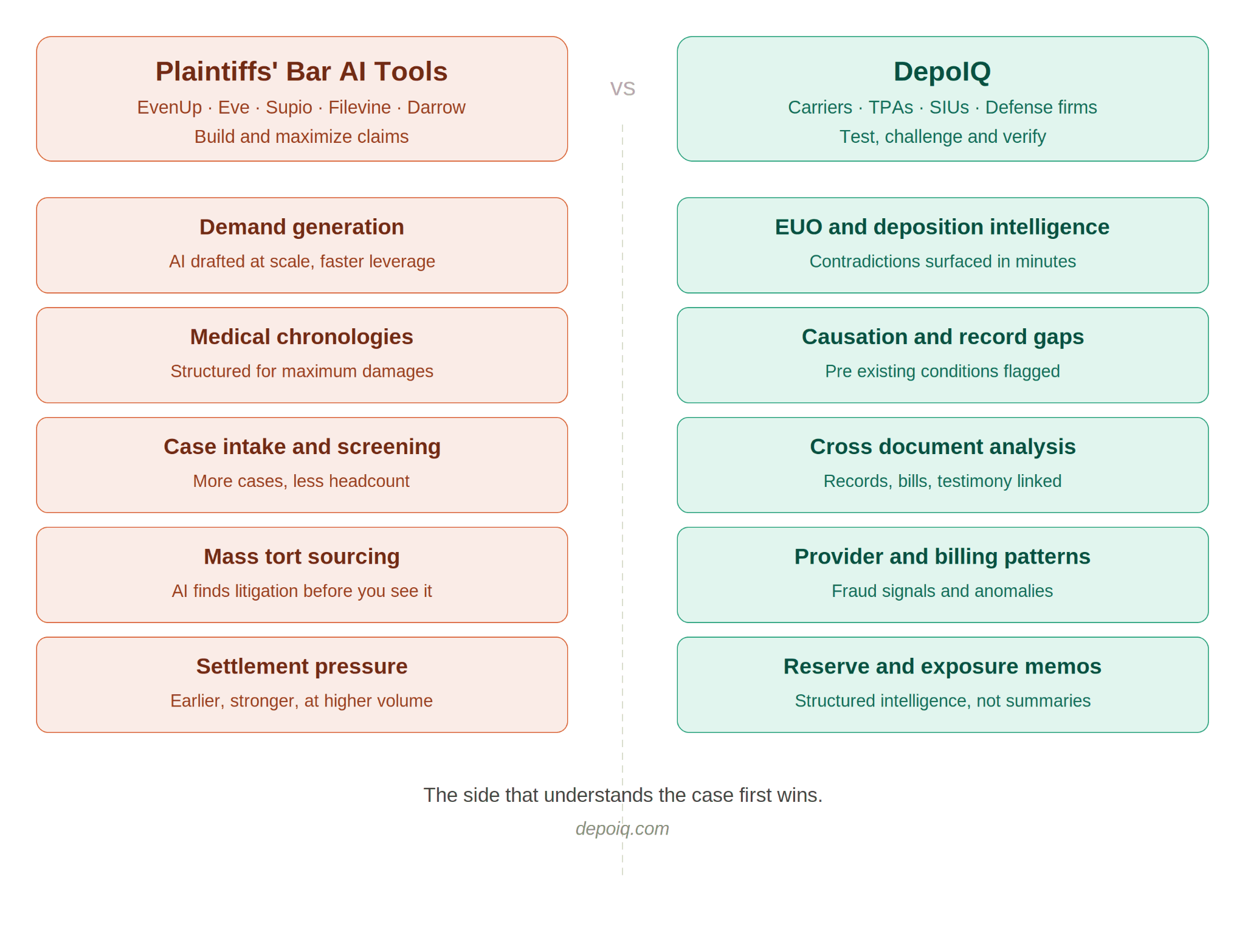
Plaintiff side AI is built to build and maximize claims. Defense and claims teams need to test them. They need to surface contradictions between EUO and deposition testimony, identify causation gaps, evaluate provider billing patterns, flag pre existing conditions, and turn thousands of pages of disconnected records into a coherent exposure picture. These are claims intelligence problems, not drafting problems.
Human judgment will always be essential. But judgment is most powerful when it is supported by structured intelligence. The defense side does not need AI that replaces adjusters or attorneys. It needs AI that helps them see the file clearly, faster.